Read Japanese Women in Science and Engineering: History and Policy Change (Routledge Contemporary Japan Series) - Naonori Kodate | ePub
Related searches:
10 Inspiring Women In Science And Technology
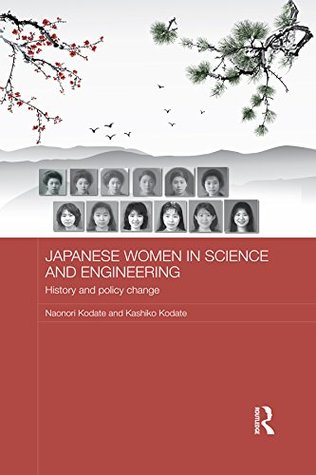
Japanese Women in Science and Engineering: History and Policy Change (Routledge Contemporary Japan Series)
How different are men's and women's brains? Not so much, says science
Science Proves Men and Women Are Actually from the Same Planet
Japanese women in science and technology - PubMed
Japanese Women in Science and Technology SpringerLink
Women in Science, Technology, Engineering, and Mathematics
The STEM Gap: Women and Girls in Science, Technology
Women and Minorities in Science and Technology: A Guide to
Mari Kotani - Space, Body, and Aliens in Japanese Science Fiction
1593 823 3955 3632 2634 2898 2497 2220 461 3099 1299 901 4895 4710 1163 2322
An online helpline received a total of 316 messages from japanese women related to sexual problems over a 3‐year period. We evaluated 276 respondents, who provided demographic information such as age and family structure as well as their response to an open‐ended question regarding their sexual problems.
By the 1930s lise meitner was special, not only because she was one of the few women allowed to work in science, but she was also the foremost nuclear scientist in germany. But she was also of jewish descent, and when the nazis rose to power in 1938 she was forced to flee the country.
This book deals with the situation surrounding japanese women in scientific research. As the authors state, like many other countries, japan is still in the middle of tackling the common problems known as ‘glass ceiling’ and ‘leaky pipes’ that are facing women in stem.
Talk about a trailblazer: patsy mink, a third-generation japanese-american, became the first asian-american woman (and the first woman from an ethnic minority group) to be elected to the united states congress in 1964. In her four decades there, she worked to amplify the voices and rights of immigrants, women and children.
Japanese characters: では、また。 notes: ja mata (じゃ、また) or ja ne (じゃね) can be used in informal situations.
Here's a look at why more women don't win more nobel prizes in science, an issue that involves women's exclusion from education and careers in science. Feeney - arizona state university 11 october 2019 the rarity of female nobel.
Japanese women experience far fewer difficulties with menopause than their north american counterparts, new research shows. Most notably, reports of symptoms such as hot flashes and night sweats.
The extent to which women could participate in japanese society has varied over time and social classes. In the 8th century, japan had women emperors, and in the 12th century during the heian period, women in japan could inherit property in their own names and manage it by themselves: women could own property, be educated, and were allowed, if discrete (sic), to take lovers.
Japanese women account for 49% of university students, but they only make up 14% of faculty positions. In business, japanese women account for 2% of positions on boards of directors and 1% of executive committee members.
From the co-discoverer of carbon nanotubes to the first chinese woman to win a nobel prize, here are the 15 female scientists featured on the as100 list.
There are many women who claim that they dislike feminism but unwittingly deploy avidly feminist rhetoric, and this is the case for most japanese female sf writers.
Nov 9, 2020 stem - the suffrage science award celebrates women in stem. Team but also across the world including japan where a number of female.
Siobhan is a passionate writer sharing about motivation and happiness tips on lifehack. Read full profile there is an obvious and worrying shortage of women in science, particularly in caree.
Last year, 5,318 japanese men married koreans while 2,235 japanese women married koreans. ] source: 2003 ministry of health, labor, and welfare you've read of free articles.
Santa barbara blazing a path: japanese women's contributions to modern science.
Sep 2, 2017 this paper surveys female holders of bachelor's and doctoral degrees of stem.
She established the society of japanese women scientists as well as the saruhashi prize, which is awarded yearly to a female scientist who serves as a role.
Women make up only 28% of the workforce in science, technology, engineering and math (stem), and men vastly outnumber women majoring in most stem fields in college. The gender gaps are particularly high in some of the fastest-growing and highest-paid jobs of the future, like computer science and engineering.
Kyushu university quota: 1st group: 45 students chosen regardless of gender 2nd group: admit at least 5 women out of 9 slots guaranteed minimum of 5 women in 54 total total places. Reverse discrimination violates equality of gender before the law principle.
Post Your Comments: