Read The Omnivore's Dilemma: A Natural History of Four Meals - Michael Pollan file in ePub
Related searches:
351 4329 578 3137 57 1057 3617 1518 2604 3184 2089 1810 3949 4827 4270 4751 3563 4275 1950 1986 99
The chemicals they use are all natural, but it's not truly organic if you use pesticides or other chemicals. In the omnivore’s dilemma pollan says, “instead of toxic pesticides, crops are sprayed with natural substances, like bt, a pesticide made from a common soil bacteria” (140.
Jan 8, 2010 pollan discusses america's dilemma regarding food production and selling book the omnivore's dilemma: a natural history of four meals.
In the omnivore’s dilemma, pollan explores each of the three methods of food creation, industrial, organic, and hunter/gatherer, and examines the costs and benefits of each. There are of course two sides to every story, and pollan is careful to examine the benefits from cheaper food in terms of health and living standards.
Michael pollan, the omnivore's dilemma: a natural history of four meals, new york: penguin press, 2006.
He structured his investigation into four meals: a fast food meal eaten in the car, an organic meal from whole.
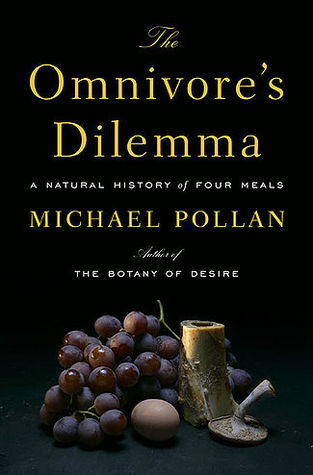
The omnivore's dilemma: a natural history of four meals, michael pollan. The omnivore's dilemma: a natural history of four meals is a nonfiction book written by american author michael pollan published in 2006. In the book, pollan asks the seemingly straightforward question of what we should have for dinner.
The omnivore's dilemma: a natural history of four meals by michael pollan ( 2006).
The omnivore's dilemma: a natural history of four meals, by michael pollan.
It may be “natural” for humans to eat animals, but pollan points out that human culture treats certain animals very differently than others. For example, cats and dogs are regarded as pets and lavished with love and attention, while pigs are brutalized in meat factories.
Many of the organic farmers pollan encounters developed their political ideals from the radicalism.
And what, in a true accounting, it really cost, writes pollan in the omnivore's dilemma: a natural history of four meals. By the time readers reach this passage, which comes at the very end of the book, they will be able to answer at length.
Nov 1, 2006 in the omnivore's dilemma: a natural history of four meals, food writer and uc- berkeley professor michael pollan examines three american.
The omnivore's dilemma has returned with a vengeance, as the cornucopia of the modern american.
The omnivore's dilemma: a natural history of four meals is a nonfiction book written by american author michael pollan published in 2006. In the book, pollan asks the seemingly straightforward question of what we should have for dinner. As omnivores, the most unselective eaters, humans are faced with a wide variety of food choices, resulting in a dilemma. Pollan suggests that, prior to modern food preservation and transportation technologies, this particular dilemma was resolved primarily throug.
Mar 9, 2011 michael pollan's latest book, the omnivore's dilemma, is about this connection between food and knowledge.
Omnivores dilemma a natural history of four meals by michael pollan available in trade paperback on powells.
The omnivore’s dilemma a natural history of four meals what should we have for dinner? the question has confronted us since man discovered fire, but according to michael pollan, the bestselling author of the botany of desire, how we answer it today, at the dawn of the twenty-first century, may well determine our very survival as a species.
Oct 11, 2018 pollan looks at the three principal food chains� industrial, organic and hunter/ gatherer and has a meal from each.
Michael pollan's omnivore's dilemma: a natural history of four meals is a critique of industrial farms: they raise animals shoulder to shoulder standing in their own manure, feeding them foods that they are not designed for and which make them ill, and then use chemicals to compensate for these sins.
What should we have for dinner? ten years ago, michael pollan confronted us with this seemingly simple question and, with the omnivore’s dilemma, his brilliant and eye-opening exploration of our food choices, demonstrated that how we answer it today may determine not only our health but our survival as a species.
The omnivore's dilemma is bestselling author michael pollan's brilliant and eye-opening exploration of these little-known but vitally important dimensions of eating in america. Pollan has divided the omnivore's dilemma into three parts, one for each of the food chains that sustain us: industrialized food, alternative or organic food, and food people obtain by dint of their own hunting, gathering, or gardening.
The omnivore’s dilemma: a natural history of four meals [is] a book that—i kid you not—may change your life. ” —austin american-statesman “with the skill of a professional detective, michael pollan explores the worlds of industrial farming, organic and sustainable agriculture, and even hunting and gathering to determine the links of food chains: how food gets from its sources in nature to our plates.
Com what should we have for dinner? to one degree or another this simple question assails.
The omnivore’s dilemma: a natural history of four meals [is] a book that—i kid you not—may change your life. ”—austin american-statesman “with the skill of a professional detective, michael pollan explores the worlds of industrial farming, organic and sustainable agriculture, and even hunting and gathering to determine the links of food chains: how food gets from its sources in nature to our plates.
The omnivore's dilemma: a natural history of four meals summary. T he omnivore's dilemma: a natural history of four meals is a book by michael pollan that argues for the consumption of sustainable.
The omnivore's dilemma was called the most important food politics books of all time. Michael pollan explores the current state of the american food industry.
Feb 20, 2018 the omnivore's dilemma discusses the issues that accompany humans' increasing reliance on a very narrow biological niche, and the many.
Post Your Comments: