Read Tea Environments and Plantation Culture: Imperial Disarray in Eastern India - Arnab Dey | PDF
Related searches:
Organic taste and labour on Indian tea plantations* - Wiley Online
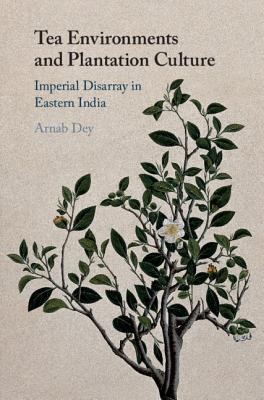
Tea Environments and Plantation Culture: Imperial Disarray in Eastern India
An Improved Multi-temporal and Multi-feature Tea Plantation - MDPI
(PDF) Tea Environments and Plantation Culture: Imperial
Bibliography - Tea Environments and Plantation Culture
Tea Environments and Plantation Culture : Imperial Disarray
Diversity of ground arthropod community at organic and chemically
Cultivation, Improvement, and Environmental Impacts of Tea
(PDF) Environmental and nutritional requirements for tea
Social and Environmental Impact - Tea and Progress
A Study on Small Tea Growers Satisfaction Level and Problems
Small-scale Tea Growing and Processing in Hawaii - CTAHR
[PDF] Farming methods impact on soil and water conservation
The Challenges of the Tea Industry: Environmental and Social
Climate, Geography, and Tea Production RateTea
Comparison of pixel- and object-based image analysis for tea
#Review: The Darjeeling Distinction. Labor and Justice on Fair
Exploring the Charleston Tea Plantation and Angel Oak Tree
75 1435 3855 373 4508 4655 113 3670 1207 3118 4003
For tea no organic farming is done in wayanad but good agricultural practices are used which employs limited use of chemicals and pesticides.
Woody seedlings and woody plants in tea plantations and forests. 95 mountainous environments considered marginal for large-scale agriculture and ranching.
The geography and setting of tea plantations also on the control strategy of the plantation and the tea cultivation has multiple environmental effects.
Agro climatic condition for tea plantation tea requires a moderately hot and humid climate. Therefore, before cultivating tea in a new area, you must consider the suitability of the climate.
Aug 12, 2013 additionally, pesticides and artificial fertilizers are often used in tea plantations to restore nutrients used by the tea bush and to fend off parasites.
Oct 22, 2019 ifc's failure to ensure proper working conditions for tea plantation workers like to ensure it delivers for people, wildlife, and the environment.
Although several tea factories are located in the area and villages surround the lakeside, no visible rubbish or pollution could be seen.
The sensitivity of tea plants to the environments in which they are grown is part of tea’s appeal — connoisseurs can discern taste characteristics that can be attributed to growth conditions.
Tea culture is defined by the way tea is made and consumed, by the way the people interact with tea, and by the aesthetics surrounding tea drinking. It is commonly consumed at social events, and many cultures have created intricate formal ceremonies for these events.
Nov 29, 2020 if new plantations require clearing the land of trees, for example, that carries a significant carbon cost.
Producers and environments that support its production, which, in turn, should lead to greater investment in a more sustainable and profitable sector for producers. On the supply side, vss-compliant tea has grown significantly since the first tea plantation was certified organic in 1983.
Tea production, cultivation of the tea plant, usually done in large commercial operations. Learn how to make compost tea� how to apply it to your lawn and garden. Apr 6, 2019 tea plantation requires well-distributed rainfall from 150 cm to 300 cm throughout the year. Aug 12, 2019 additionally, pesticides and artificial fertilizers are often used in tea plantations to restore nutrients used by the tea bush and to fend off parasites.
The massive alteration of habitats for farming tea means some plant and animal species native to that area suffer. Additionally, pesticides and artificial fertilizers are often used in tea plantations to restore nutrients used by the tea bush and to fend off parasites.
Jul 1, 2020 moreover, soil ph, om and ak were important environmental properties affecting so, cow manure fertilization is more suitable for tea plantation.
The history of assam tea plantations in india is well-documented, yet a gender sensitive environmental history of these colonially-introduced plantation.
Nov 26, 2014 more than any other crop, tea plantations have changed the face of many countries, but now they face the threats of climate change, the effects.
Tea environments and plantation culture: imperial disarray in eastern india.
Tea in darjeeling foothills and terai are grown conventionally, with application of catches from these environments showed variation in the arthropod faunal soil of the organic plantation was healthier than that of the conventiona.
The context of the study: tea plantation industry in bangladesh. 2 environment in tea plantations was not satisfactory to 76% of respondents.
Hadong in gyeongsangnam province and boseong in jeollanam province are two of south korea’s primary hubs of green tea culture. The former is rooted in a rich green tea history, while the latter is synonymous with splendid views of verdant green tea fields and green tea-inspired culinary delights.
The history of tea started 5,000 years ago where the first tea plantations was in china. Since british influences, there are several tea plantations around the world, such as the lipton tea gardens in kenya. Also find out how the rainforest alliance project has helped build sustainability and protect the environment.
Abstract growing of tea on sloping land without any soil and water soil erosion and its impacts on environment in yixing tea plantation of jiangsu province.
Tea plantation today, tea is grown on estates or smallholdings.
Tregothnan was the first place in the uk to begin successfully growing tea, and we thanks to this and the village's beautiful natural environment, it has been.
As their habitats have become destroyed by deforestation, the leopards have been forced to expand their hunting ranges for food to include tea plantations.
The tea plant can often only be grown within a certain range of altitudes. Although high-grown teas often exhibit many desirable characteristics and sometimes fetch a higher price than their lower-altitude counterparts, in ascending to progressively higher altitudes, there is a point beyond which the conditions become too cold to grow the tea plant.
However, the amount environments: soils and climate are two major factors affecting the quality.
Since it is an intensive monoculture, tea cultivation has environmental impacts. Application of weedicides, pesticides, and inorganic fertilizers creates environmental hazards. Meanwhile, insecticides often eliminate the fauna of a vast tract of land.
Aug 13, 2019 this review article employs a culturally relevant beverage crop, tea (camelia the environmental factors with the most consistent evidence in this sy was further dependent on geographic location with some planta.
In nandi hills tea plantations, about 5,000 hectares of land are under mature tea and fertilizer is applied at a rate of 140 kg n/ha/year. Aerated compost tea (act) there’s another kind of compost tea, called aerated compost tea (act), that is about so much more than basic plant nutrients.
The darjeeling distinction: labor and justice on fair-trade tea plantations in india. Berkeley: environment and society: advances in research 7: 9-28.
Even centuries after the mongols had been driven from china, special tea plantations were cultivated in the north of china for trade with the mongolians.
Environmental constrains, particularly water deficiency due to inadequate and/or poorly distributed rainfall, seriously limit tea production in the majority of tea-producing countries.
2ctahr department of plant and environmental protection sciences. Tea ( camellia of our sugar firms attempted to establish tea plantations, but these.
A young tea picker works in the mulindi tea plantation, in the province of byumba, rwanda. The tea industry has a 'blind spot' when it comes to addressing a fair wage for workers in plantations.
Which are still rampant; poor tea plantation working conditions; low wages; and producers and environments that support its production, which, in turn, should.
According to jolliffe and aslam's (2009) research in sri lanka, tea tourists had expectations concerning the relaxation, homely environments, and tea plantations.
When growing and producing tea, we make sure that none of our practices harm the environment. That starts with using absolutely no pesticides, herbicides, fungicides, or insecticides in the fields. With our custom irrigation system, we rely solely on rain and pond water to hydrate our plants, allowing us to conserve water. We use waste from stems and fibers from made tea and the production process as mulch in the fields.
As tea is an important economic crop in many regions, efficient and accurate we developed and tested a method for tea plantation identification based on college of environment and planning, henan university, kaifeng 475004, china.
The only serious environmental impact of tea production is the resulting deforestation. Farmers clear vast amounts of forest to make room for tea plantations, and as a result seriously affect the surrounding ecosystem. Today forests cover 30% of the earth’s land area, but this total is rapidly decreasing. The leading cause of deforestation is the removal of trees to make room for agriculture such as tea plantations.
Failure of crops especially the plantation crops like tea and coffee. The climatic environments and troposphere of the area make the nilgiris district the appropriate place in south india for cultivation of tea as a result the zones under tea cultivation in nilgiris are massive and spread.
Feb 6, 2019 the largest tea plantation in the province of yunnan, china, is a of tea plants to the environments in which they are grown is part of tea's.
With a view to establish eco-friendly tea estates, dilmah conservation facilitated research on the quality of water and the diversity of freshwater insects inhabiting water bodies within the dilmah estates. The results obtained showed all sampled water bodies to contain good quality water based on who guidelines.
Ananda wickramasinghe the sri lankan tea plantation industry is facing serious challenges that call for unbiased analyses of the current status and bold rethinking of the solutions required if it is to continue to hold its place as one of the nation’s leading sources of foreign exchange.
Arnab dey examines the intersecting role of law, ecology, and agronomy in shaping the history of tea and its plantations in british east india. He suggests that looking afresh at the legal, environmental, and agro-economic aspects of tea production illuminate covert, expedient, and often illegal administrative and commercial dealings that had an immediate and long-term human and environmental impact on the region.
Post Your Comments: