Read Raising Animals for Fiber: Producing Wool from Sheep, Goats, Alpacas, and Rabbits in Your Backyard - Chris McLaughlin | ePub
Related searches:
Wool-Yielding Animals for Yarn and Fiber - Countryside
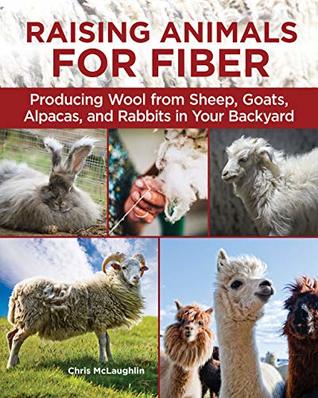
Raising Animals for Fiber: Producing Wool from Sheep, Goats, Alpacas, and Rabbits in Your Backyard
9781620083246 Raising Animals For Fiber: Producing Wool From
Amazon.com: Raising Animals for Fiber: Producing Wool from
Raising Animals for Fiber : Producing Wool from Sheep, Goats
Raising Animals For Fiber: Producing Wool From - Chapters Indigo
Raising animals for fiber : producing wool from sheep, goats
Raising Animals For Fiber: Producing Wool From Sheep, Goats
Introduction: Why Do We Raise Animals for Food and Products
Cows, Chickens, Fish, and Other Animals Used for Food PETA
Advantages of Using Natural Wool Fiber From Sheep, Goats, and
Read Raising Animals for Fiber Online by Chris McLaughlin Books
Raising Animals for Fiber – Small Farmer's Journal
Couple who raises animals for their fiber is finding ways to help
How to Raise Wool Animals for Yarn - Timber Creek Farm
Goats for Fiber Agricultural Marketing Resource Center
Raising Angora Rabbits for Wool - Treehugger
Wool Comes From Many Animal Breeds - Illinois Farm Bureau
Goats for Fiber Angora goats, Goats, Angora - Pinterest
Raising sheep only for wool (animal fibers forum at permies)
Raising Rabbits for Fur: Best Fiber Breeds, Housing, Feeding
Raising Mohair Goat Breeds for Fiber - Backyard Goats
10 Best Goat Breeds for Fiber Production
Animals for Food & Performance Food Systems Washington State
Animal Fiber Production for the Fashion Supply Chain: Developing
Regenerative Farming Practices for Fiber Farms Carolina Farm
(PDF) Present Situation and Future of Animal Fiber Production in
Tips and Tricks to Fabulous Fiber Goats - OSU Extension Service
Animal Production National Institute of Food and Agriculture
8 Most Profitable, Easy & Small Animals To Breed For Money
Fiber from llamas
Raising Goats for Profit (2020): Complete Beginner’s Guide to
Ethical Concerns Regarding Raising Livestock Animals for Food
NOW THAT'S RURAL: Collen and Mike McGee, Rowantree Farm
5 Most Profitable Farm Animals To Raise For Beginners
2270 4673 3712 2735 4068 2160 2230 4985 2501 3837 722 2700 30 3052 2912
So you want to expand your backyard farm to include some fiber producing animals? contrary to peta's warnings, not all animal fiber is harvested cruelly.
Sep 22, 2015 females who produce both fiber and offspring typically start at in this country breeding the animals primarily for fiber is expanding, with many.
Fiber animals for the backyard and hobby farm raising backyard fiber animals is rising in popularity, as more and more people seek traditional textiles for yarn-focused crafts like knitting, crocheting, and weaving, as well as spinning, embroidery, needlepoint, needle felting, wet felting, and fiber dying.
Raising animals for fiber: producing wool from sheep, goats, alpacas, and rabbits in your backyard (companionhouse books) livestock health, grooming�.
This article covers basic concepts related to raising these animals. New and beginning producers should seek further information on not only basic production practices but also nutrition, reproduction, and health in order to produce high-quality, healthy animals.
Animal fiber production for the fashion supply chain: developing sustainable sustainable sheep husbandry, and engagement with farm professionals.
People from as far away as europe and australia are starting to get their hands on the wonderful paco-vicuna roving and yarn.
Mar 10, 2017 angora goats enter the barnyard on the cauffman farm. Cauffman had his sheep sheared, but said the wool was not making him any money.
Livestock animals are commonly farmed for their meat, hides, wool, milk, and in producing blue-gray crossbred cattle, obtained by breeding white shorthorn.
The most valuable alpaca fiber is “baby alpaca”, which is softer and finer than adult fiber. In fact, baby alpaca is not the fiber from a baby animal; rather, it is the first shear on a young animal. Today, modern breeding techniques are producing grades of alpaca fiber that are even finer than baby alpaca, such as “royal alpaca”.
Jun 12, 2018 sustainable farming encompasses more than food, and fiber farmers are one textile production is currently one of the most environmentally in many ways these farmers resemble vegetable, fruit, or livestock farmers.
Hundreds of alpaca fans and fiber artists from across the country will converge in lebanon, tennessee, to celebrate natural fiber through hands-on workshops, seminars, live animals, and vendors.
Jan 24, 2020 today we will be speaking with keisha cameron of high hog farm about her passion for producing animal fiber.
While all goats are capable of producing cashmere, the goats that are dubbed “cashmeres” and used as a fiber producing animal are exceptional at producing cashmere, and are bred with the goal of furthering both the quantity and quality of this textile material.
Jan 24, 2021 which wool-yielding animals should you raise? many sheep breeds produce a fleece, but not all wool is garment quality.
Cashmere goats also don't produce as much fiber per animal because half of the coat is dedicated to guard hairs.
The production of animal goods; such as meat, dairy, wool, and leather; is a scientists study the conditions in which animals are raised as well as how animal.
On average, in a year, an alpaca can produce 50 to 90 ounces of high-quality fiber and between 50 and 100 ounces of low to mid-quality fiber. Finally, in terms of llama vs alpaca fibers, alpacas offer more colors, so you might need to treat llama wool to get the color that you want.
Jan 19, 2021 the animals they raise produce fibers that are made into yarn. In addition to working with the fiber, this spring, collen and michael mcgee plan.
They are basically hair or fur or skin or secretions of animals. These fibers are then woven or knitted or felted to form beautiful animal fabric and ultimately made into soft and warm jackets, ponchos, blazers, wraps, shawls, coats and other clothing and accessories.
Natural fiber was the first available material for clothing and the cashmere and mohair were luxury fibers used for the finest of clothing and other items. The fiber industry has struggled in recent years and numbers have been lost as many producers switched to other breeds of goats in order to survive.
Animal fibers are natural fibers that consist largely of certain proteins. Examples include silk, hair/fur (including wool) and feathers. The animal fibers used most commonly both in the manufacturing world as well as by the hand spinners are wool from domestic sheep and silk. Also very popular are alpaca fiber and mohair from angora goats.
Sustainable agriculture is the production of food, fiber or other plant or animal products using farming techniques that protect the environment, public health,.
Feb 1, 2021 small livestock that produces marketable fiber angora rabbit breeds about angora rabbit wool harvesting angora wool benefits of raising.
The angora goat produces mohair—a long, curly fiber prized for its luster. The cashmere produces softer, downier fiber, not quite as durable as mohair. The pygora is a cross between the curly-haired angora and the downy pygmy goat.
I wonder if the answer to this over all issue; wool production without meat sales (culling of some sheep would have to take place obviously to properly maintain wool quality), might be interweaving other natural fibers to make a superior/hybrid natural fiber. Would it be possible to raise flax, interweave it with wool to make a natural fiber.
Yarn weights are considerations when deciding which fiber breed or species to raise for your yarn. Wool, fleece, and fiber can be harvested from a number of wool-yielding animals, including sheep, goats, rabbits, camels, llamas, alpaca, bison, and yak! the fiber from bison, camels, and yak are the more rare fibers.
Plus, unlike some of the other fiber-producing animals, alpaca fiber is found in an amazing selection of colors. “alpaca fiber is fairly easy to market because of its unique qualities,” potter says. “it is soft, lightweight, warmer than wool, wrinkle and odor resistant, and it wicks moisture.
To do this, decide whether it’s more important for you to raise sheep for meat, fiber, dairy, or multiple purposes. If you are in the market for a meat-only sheep, consider a hampshire, katahdin, or suffolk sheep. Hampshires produce large flocks, with a high ratio of meat per sheep.
Means all-inclusive of what is required to raise fiber goats it is a good starting point. Mohair: fiber produced by angora goats; fine to medium fiber.
As more and more people are discovering, raising alpacas can add a dimension alpacas are sheared once a year, each animal produces about five to twelve.
This fiber is used in the production of the famous “pashmina scarf” which is well known the world over. Type of fiber they produce: cashmere the don goat breed is from russia, the don river are of the lower volga territory. This goat is a dual-purpose breed being used for fiber, meat and goatskin production.
Sep 10, 2019 buy the paperback book raising animals for fiber: producing wool from sheep, goats, alpacas, and rabbits in your backyard by chris.
But the nice thing is that you can, in fact, make a profit from fiber animals. Goats are cost efficient in that they eat a similar amount to sheep and other fiber animals, but produce twice as much fiber. In this post i’d like to: to show the cost breakdown of keeping 1 goat for a year.
Write the animal's name and year of harvest on the bag(s) so you can easily match fiber type and color later. Llama fiber, like wool and other animal fibers, should be stored dry, away from light and bugs. Vegetable matter and dirt attracts insects -- another reason to strive for clean fleeces.
Though many of us consume meat, dairy, and eggs from animals raised on feedlots, only a fraction of the calories in feed given to livestock make their way into the meat and milk that we consume.
Agriculture is the process of producing food, feed, fiber and many other desired products by the cultivation of certain plants and the raising of domesticated animals (livestock).
Grain must be low in copper content, as copper is toxic to all fiber-producing animals. We researched and found a grain formula, with very low copper, that can be used for a mixed herd of sheep and goats. Research grain formulas and mineral supplements before buying for your fiber-producing goats.
Have you been staring longingly at those wide eyed alpacas you see out to pasture.
Industry and rural development and the preservation and development of folkloric culture and native farm animals which produce.
Angora goats may be the most efficient fiber producers on earth. Mohair clip originates in texas, but the goats are raised across.
For many of the victims of wool production, the unspeakable horror of slaughter is leather helps make the meat industry—and animal farming—profitable.
Wool is a renewable, sustainable fiber and is classified as an eco-textile. It is an environmentally-friendly, natural, recyclable material. Providing animals are well cared for, a fiber crop can be harvested for many years without harm to the herd.
Sheep are the most prevalent producers of wool, though it also comes from rabbits, goats and alpacas.
Learning to raise fiber rabbits, such as french angora rabbit can bring you lots of wool for making hats, scarves, mittens and even blankets. Angora rabbit care is easy, but will need some extra steps over a meat or pet rabbit. Fiber rabbits are primarily raised for their hair, and hair can get long or matted.
This book offers an essential reference for anyone who is considering their own production of animal fibers.
Goats also produce fine fibers like cashmere, angora, and mohair, and have grown in popularity as a safe, environmentally sound method of controlling weeds and brush in terrain that’s otherwise difficult to clear, improving pasture for grazing animals.
Because they don’t eat a lot, they are one of the lowest cost farm animals to raise. Alpacas are profitable through the sale of their fiber, crias, meat, and dung. Alpaca fiber: alpaca fiber is considered extremely high quality and is fastly growing in demand.
Rabbits are the perfect choice for a backyard farmer that would like to start producing their own fibers for either resale or crafts. Typical fiber farm animals include sheep, goats or alpacas – some of which can top out at 200 pounds or more – not always practical for someone farming on under an acre of land.
Sheep have long reigned supreme as the american homestead or farm fiber animal. But, as wonderful as these animals and the wool they produce are, they are not the only option for homesteaders seeking to find an affordable way to increase the earning potential of their land.
When i was a girl, i was fascinated with the process of spinning yarn.
But sheep are not the limit when it comes to producing fiber.
If you’re interested in producing your own fiber on your farm, whether you plan to use it for spinning or you want to sell it, there’s no better way to do it than to raise your own fiber rabbits. They are so small that they are easier to manage than other fiber animals, like sheep or alpacas.
Raising animals for the purpose of human consumption appears to be something of a moral and ethical dilemma, and here's why: animals including cattle, sheep, chickens, hogs, geese, ducks, goats, and all others are living, thinking, feeling beings.
They are specifically bred to produce fine cashmere fiber for hand spinning. Southdown sheep originated in the south “downs” of sussex county, england, and came to the united states in 1803.
Here are top five farm animals you should raise to make profit. 5 profitable farm animals you can raise to make profit: raising chicken for profit, the best source of earning: bill gates recently wrote an article on how he feels that raising a chicken can be a profitable business. He said that this can be the best way to lift people from poverty.
Relaxation, fun and a source of income are the rewards of raising these endearing animals.
Raising animals for fiber brings the expected chapters on housing, fencing and fiber. The best information is included in the sections for each of the four main fiber animal species.
Calculate the number of tons produced per acre and that will give you an easy land productivity rate. Each goat unit will require approximately 1 ton of hay/ forage.
May 5, 2017 if i took the animals to the country fair and if the animal won a blue ribbon i do think it is possible to raise sheep for wool production profitably,.
It is most common that meat goat or diary goat operations produce fiber along with their primary products.
Angora raising considerations: angora rabbits require special husbandry practices that are important to their health as well as fiber production.
Oct 1, 2018 but fiber producers can also become leaders in helping to shift grazing management plans try to align the farm's livestock carrying capacity.
Post Your Comments: