Read Processionary Moths and Climate Change : An Update - Alain Roques | PDF
Related searches:
Battisti A (2008). Forests and climate change - lessons from insects
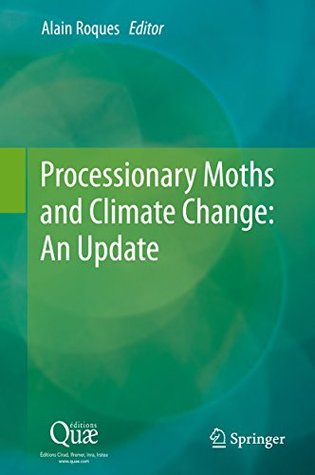
Processionary Moths and Climate Change : An Update
Amazon.com: Processionary Moths and Climate Change : An
Processionary Moths and Climate Change: An Update (Hardcover
Processionary Moths and Climate Change : An Update - Google Books
Processionary Moths and Climate Change : An Update eBook by
Processionary Moths and Climate Change : an Update (2014
Processionary Moths and Associated Urtication Risk: Global
Range-Expansion in Processionary Moths and Biological Control.
Processionary Moths and Climate Change : An Update : Alain
Processionary Moths and Climate Change: An Update: Amazon.co
Climate Change Impacts on Forest Insects – Climate, Forests and
Agriculture and Forestry Climate Change Impacts Report - NERC
Forestry and Peatlands - Spain - Climatechangepost.com
Processionary Moths and Climate Change : An Update SpringerLink
Processionary Moths and Climate Change : An Update : pdf free
Moths and Climate Change Butterfly Conservation
Effects of climate on pine processionary moth fecundity and
Processionary Moths and Climate Change : An Update eBook por
Climate change and globalization, drivers of insect invasions
3251 2505 3781 3411 4702 4571 4935 379 226 8 1409 4705 4106 3223 77 270 3861 275 1904 3050 537 1988 3582 2384 640 2187 2631 2897 3977 1893 4457 4736 4412 4760 260
Processionary moths and climate change� an update by alain roques, 9789401793391, available at book depository with free delivery worldwide.
Processionary moths carry urticating setae, which cause health problems in humans and other warm-blooded animals. The pine processionary moth thaumetopoea pityocampa has responded to global change (climate warming and increased global trade) by extending its distribution range. The subfamily thaumetopoeinae consists of approximately 100 species.
Global climate change is resulting in a wide range of biotic responses, including changes in diel activity and seasonal phenology patterns, range shifts polewards in each hemisphere and/or to higher elevations, and altered intensity and frequency of interactions between species in ecosystems.
Read processionary moths and climate change� an update by available from rakuten kobo. Because of its peculiar biology, its negative impacts on forestry, and its urticating larvae affecting human and animal.
Since the ipcc retained the moth as one of the two insect indicators of climate change because of its expansion with warming up, filling this gap became increasingly important.
Climate change can harm many species by disrupting existing interactions or by instance, intensify the interaction between the pine processionary caterpillar,.
The caterpillars (larvae) of oak processionary moth (opm) are pests of oak trees (trees in the quercus genus), and a hazard to human and animal health. Opm was first accidentally introduced to england in 2005, and is subject to a government-led programme of survey and control to minimise its population, spread and impacts.
Mediterranean forests regularly suffer plagues of this insect, which has been moving north as a result of global warming.
Evidence for current effects of climate change (cc) on forest insect pests in the expasion of the pine processionary moth, thaumetopoea pityocampa, (battisti.
Processionary moth prevention strategies climate change is increasingly recognized as a serious, worldwide public health concern. Recently the dutch climate and health knowledge agenda identified the oak processionary moth (opm: thaumetopoea processionea) as one of the emergent problems that is exacerbated by climate change.
The winter pine processionary moth, thaumetopoea pityocampa offers a possibility to test for the effects of global warming on an insect population over a wide.
Dec 24, 2014 a model describing its spread was devel- oped to simulate its potential range in france under various climate change scenarios.
Like many other species, moths are also likely to face problems as the changing climate alters the timing of spring and the growth of their food plants. Moth life-cycles have evolved to be synchronised with their food-plants, but climate change is affecting the emergence of leaves on trees and other plants. This, in turn, can have disastrous impacts on the breeding birds which rely on a supply of caterpillars to feed their young.
Unlike most other insects, the larval development of the pine processionary occurs during fall and winter and is highly sensitive to slight temperature variations. Winter warming increases the survival of the caterpillars and allows them to complete their development in areas where climatic conditions were previously hostile to them.
Lee processionary moths and climate change� an update por disponible en rakuten kobo. Because of its peculiar biology, its negative impacts on forestry, and its urticating larvae affecting human and animal.
A rapid altitudinal range expansion in the pine processionary moth produced by the 2003 climatic anomaly. Climate change and range shifts in two insect defoliators: gypsy moth and nun moth – a model study.
Climate change exacerbates the oak processionary caterpillar problem in the netherlands.
Information, advice and guidance on the introduced pest oak processionary moth the caterpillars (larvae) of oak processionary moth (opm) are pests of oak trees moths in late summer, which can help us to detect changes in the dist.
Global change and pine processionary moth: a new challenge for integrated pest management.
Learn about oak processionary moth, including its history, affected areas, life cycle, and symptoms based on zip code [change] in a weakened state, the tree will be more susceptible to other pests, disease, and environmental cond.
Post Your Comments: