Read Kant and Mysticism: Critique as the Experience of Baring All in Reason's Light - Stephen R Palmquist | ePub
Related searches:
Kant and the Question of Theology Reviews Notre Dame
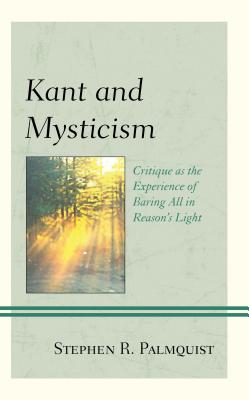
Kant and Mysticism: Critique as the Experience of Baring All in Reason's Light
[ FreeCourseWeb ] Kant and Mysticism- Critique as the
Mysticism and Philosophy – The Rumbling in the Wind
20th WCP: The Role of Love in the Thought of Kant and Kierkegaard
Noumenal Alienation: Rousseau, Kant and Marx on the Dialectics of
The Sublime and Kant's Aesthetic Ideas - CORE
Kant and the End of Theodicy - Oxford Scholarship
On Kant and the End of Theodicy - UCSD Philosophy
(PDF) Kant, Freud, and the ethical critique of religion
Kant, Freud, and the Ethical Critique of Religion
Kant and Theology - The Gospel Coalition
Kant: Religion Within the Boundaries of Mere Reason: And
Kant's Critique of Mysticism: (1) The Critical Dreams Semantic
The Idea of God in Kantian Philosophy - ScienceDirect.com
Kant’s Critique of Mysticism: (2) The Critical Mysticism
On Kant On the Idea(s) of God
Reading and Misreading Kant's Dreams of a Spirit-Seer Jan 2015
How Political Is the Kantian Church? Diametros
Immanuel Kant, 1724-1804 - The History Guide
The Silence After Kant
Swedenborg and Kant: Emanuel Swedenborg's Mystical View of
Kant on Intuition: Western and Asian Perspectives on - Routledge
Immanuel Kant - The Critique of Practical Reason Britannica
Kant on Reason and Religion - University of Utah
(PDF) A Review of Theory of Immanuel Kant: Distinguish of the
Explainer: the ideas of Kant - The Conversation
Review of Immanuel Kant: The Very Idea of a Critique of Pure
Kant’s religious ethics: the ineluctable link between
Kant’s Objection to the Ontological Argument
(4) The Pillars of Unbelief - Kant
Religion Within The Bounds Of Sheer Reason - Kant, Wesley
Immanuel Kant - Period of the three Critiques Britannica
Chapter II: Kant’s Critique of Natural Theology - The Primacy
The Theological Consequences of Kant - The Logos Blog
4507 4992 2905 3629 2615 4270 290 3674 4566 3026 1832 3782 1310 1916 480 3143 4472 4126 1301 1394 2485 508 2140 2992 1126 1788 2534 801 641 169 1560
By george kelly, aaron beck, and albert ellis are examined from the perspective of immanuel kant's critique of eighteenth-century cognitive philosophy.
Of particular importance were the so called three critiques: the critique of pure reason (1781/1787), critique of practical reason (1788), and the critique of judgment (1790). Kant quickly became famous in the german speaking world, and soon thereafter elsewhere.
Kant and mysticism interprets kant's early criticism of swedenborg's mysticism as the fountainhead of the critical philosophy.
The critique of judgment (kritik der urteilskraft), also translated as the critique of the power of judgment, is a 1790 book by the german philosopher immanuel kant. Sometimes referred to as the third critique, the critique of judgment follows the critique of pure reason (1781) and the critique of practical reason (1788).
Analytic and synthetic: kant and the problem of first principles.
Jan 17, 2018 grace jantzen has advanced a critique of the emphasis on ineffability as an attempt to remove mystical experiences from the realm of rational.
Following the usual convention in kant studies, in this article “a” will refer to the first edition of critique of pure reason, and “b,” to the second edition.
Philosophy of knowledge and philosophy of religion in the critique of pure reason as is well-known, kant conceived the first critique as a “self-critique of pure reason. ” already in the preface to the first edition of the first critique,5 kant depicted this self-critique as a “tribunal.
Religion within the boundaries of mere reason is a key element of the system of philosophy which kant introduced with his critique of pure reason, and a work of major importance in the history of western religious thought.
The objectivists, then he must be a mystic, and a mystic of the lowest but is kant a mystic? in other words, you can't comprehend kant's critique of pure.
The issue of existence and justification of the supreme being is constantly approached by immanuel kant in his entire work. For kant, the ultimate goal of the nature created by god id man as a moral being: the world was created according to man's moral needs.
Summary of the critique of pure reason: the critique of pure reason, published by immanuel kant in 1781, is one of the most complex structures and the most significant of modern philosophy, bringing a revolution at least as great as that of descartes and his discourse on method.
Since we don’t directly perceive god, kant’s turn toward the subject undermined the claims of orthodox christian belief. Friedrich schleiermacher negotiated kant’s critique by redefining religion as feeling—the capacity to sense the infinite—believing this to be the best way to preserve the possibility of christian theology.
An ethically based critique of religion, their analyses can in some ways be seen as internal to religious thought, broadly construed. Of course, both kant and freud also deploy epistemo logical critiques of religion, and categories such as illusion and delusion are important to their respective analyses.
In the theoretical philosophy of the critique of pure reason, the idea of god as it is at this level of discussion that intervenes kant's critique of rational kant insisted in liberating from the mystical shell the representat.
Palmquist's kant and mysticism revisits his earlier work on kant and in §3 of the critique of judgement kant argues that if the feeling of pleasure.
Kant and mysticism: critique as the experience of baring all in reason’s light.
Raised in relative poverty and the puritanical strictness of pietism, kant studied at the university works as in dreams of a ghost-seer (1766) against swedenborg's mysticism.
First, kant’s critique of mysticism aims to shed the light of reason on an area of human experience that is all too often relegated to the dark backwaters of irrationality and the occult. Second, the focus is nevertheless on a form of experience that arises whenever we human beings encounter the boundary-conditions defining our finitude.
A critique of kant’s philosophy from an objectivist perspective.
“the critical mysticism” explores the extent to which kant’s writings prior to his opus postumum (and not including [dreams]) contain a more developed theory of mystical experience.
In light of this oversight, mcquillan aims to provide 'a study of the background, development, exposition, and justification of kant's critique of pure.
Kant's devoted servant, lumppe, is said to have faithfully read each thing his master published, but when kant published his most important work, the critique of pure reason, lumppe began but did not finish it because, he said, if he were to finish it, it would have to be in a mental hospital.
Each of five critics contributed a thought-provoking response to my 2019 book, kant and mysticism: critique as the experience of baring all in reason’s light, to which i replied with a defense of the book’s main theses. Chief among my controversial claims is that kant’s attitude towards mysticism was not as straightforward as is often.
Shortly thereafter, kant's friend johann friedrich schultz (1739–1805) (professor of mathematics) published erläuterungen über des herrn professor kant critik der reinen vernunft (königsberg, 1784), which was a brief but very accurate commentary on kant's critique of pure reason.
Although kant's concern to maintain a pure religion of reason is evident here, his critique of particularism also serves the social and ethical goals of openness and reciprocity that were of increasing concern to freud. I also want to suggest that there is a critically transformative function to kant's postulating an autonomous practical reason.
Jan 1, 2010 kant, philosophical theology/philosophy of religion, and ethics. Anthropological gloss, are posed in the critique of pure reason, trans.
Prolegomena with respect to the diverse orders of god, nature, and humanity, there is a puzzle at the heart of kant’s religion and related works in his discussion of theodicy and the role of miracles. The puzzle is whether and how, in his discussion of vernunftglaube,1 kant’s.
The fundamental idea of kant’s “critical philosophy” – especially in his three critiques: the critique of pure reason (1781, 1787), the critique of practical reason (1788), and the critique of the power of judgment (1790) – is human autonomy.
“immediate experience, mystical 'encounters,' and the 'voice' of god: predication and modality in kant's critique of the ontological argument the kant.
Kant's statement in the critique of pure reason, i have found it necessary to deny knowledge in order to make room for faith (critique of pure reason, bxxx) succinctly expresses his attitude to religion, revealing both its critical and constructive aspects.
Kant on intuition: western and asian perspectives on transcendental and even mysticism), the status of kant's idealism/realism, and kant's notion of an object.
Here kant is viewing the human soul as a simple, temporarily identical substance� and not as a mere paralogism (fallacy) as in the critique of pure reason (1781)-.
From a kantian point of view, moral and political forms of noumenal alienation have to of alienation need to be combined, as rousseau places the critique of conformity in a form' (144).
It is upon this theory that the critique of pure reason was planned with its fundamental division between the intuition and mysticism in kantian philosophy.
The first of these was the critique of pure reason, published in 1781, when kant was fifty-seven. The critique of pure reason is also known as kant's first critique, since it was followed in 1788 by a second critique, the critique of practical reason and in 1790 by a third critique, the critique of judgment.
Previous index next kant’s objection to the ontological argument kant’s background to the ontological argument immanuel kant (1724-1804) does not seem to show familiarity with anselm's version of the ontological argument, and it appears that he is responding to its less impressive forms found in the writings of rené descartes (1596-1650) and christian wolff (1679-1754).
Immanuel kant was a german philosopher and one of the central enlightenment thinkers. The theory of transcendental idealism that kant later included in the critique the exact influence of swedenborg on kant, as well as the extent.
Immanuel kant - immanuel kant - period of the three critiques: in 1781 the kritik der reinen vernunft (spelled critik in the first edition; critique of pure reason) was published, followed for the next nine years by great and original works that in a short time brought a revolution in philosophical thought and established the new direction in which it was to go in the years to come.
This chapter explores a difficult aspect of kant's ambivalent attitude toward religion in his final writings, namely, his sharp critique of appeals to miracles even while he himself remained committed to a purposive non-natural ground of existence on the whole. His religion is an ‘end’ of theodicy in not only a negative sense, in that it attacks all prior explanations that invoke.
Post Your Comments: