Full Download The American Press and the Cold War: The Rise of Authoritarianism in South Korea, 1945-1954 - Oliver Elliott file in PDF
Related searches:
The Press and The Cold War.: By James Aronson., Monthly Review
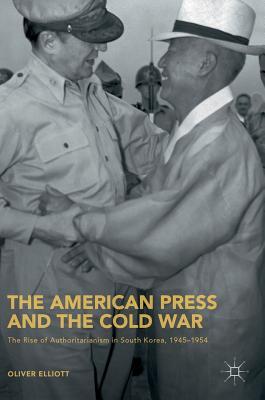
The American Press and the Cold War: The Rise of Authoritarianism in South Korea, 1945-1954
Condensing the Cold War: Reader's Digest and American Identity
The British Popular Press and the Early Cold War - JSTOR
Selling the American Way: U.S. Propaganda and the Cold War
British and American Anti-communism Before the Cold War - 1st
From Enemy to Ally: Japan, The American Business Press, and the
Post-Cold War Revelations and the American Communist Party
The Cold War and the University The New Press
Allende's Chile and the Inter-American Cold War - UNC Press
On Endings: American Postmodern Fiction and the Cold War UVA
Paul Robeson and the Cold War Performance Complex
The Soviet Union and the United States - Revelations from the
The Cold War The History of Media Use for Propaganda Purposes
Culture during the Cold War - Wikipedia
Global News After the Cold War - DigitalCommons@USU
Condensing the Cold War — University of Minnesota Press
Minehan on Hadley, 'The Rising Clamor: The American Press, the
The Cold War on the Periphery Columbia University Press
Russian-American relations in the - Manchester University Press
the Early Cold War - MIT Comparative Media Studies/Writing
Defending the American Way of Life University of Arkansas Press
The Inadequacy of American Press Freedom The American Historian
American Pop Culture and Soft Power in Cold War Europe
Beijing Escalates the New Cold War - WSJ
Red Scare: The Cold War & Television - Paley Center
Russian-American Relations in the Post-Cold War World - University
The Cold War - images
The Archaeology of the Cold War - University Press of Florida
American Arabists in the Cold War Middle East - Anthem Press
Soviet-American Relations Through the Cold War - Oxford Handbooks
3430 565 3654 1117 3971 2631 2832 28 114 4696 812 4075 571 3810 2909 3161 3254 986 4130 3655 4090 764 1593 894 4165 970 1211 2536 3811 3654 3349 4907 1968 1806 1799 4737 4511
During the period of the cold war, the influence of american popular culture in eastern european nations was profound despite in american media.
Plate 03: varieties of american-produced cold war propaganda, 19515. For several reasons, television clearly fell into the realm of white propaganda.
Focusing on the two tumultuous decades framed by indian independence in 1947 and the indo-pakistani war of 1965, the cold war on the periphery explores.
The years following 1945 witnessed a massive change in american intellectual leading intellectuals discuss the effects of the cold war on academic freedom,.
First of all, newspaper articles were key during the cold war era because of their daily frequency and high circulation number: print media used to be america's.
Core texts of american postmodernism are a response to the geopolitical dynamics of the cold war and especially to the new potential for total nuclear conflict.
Focusing on the impact of the savannah river plant (srp) on the communities it created, rejuvenated, or displaced, this book explores the parallel militariza.
Fidel castro described salvador allende's democratic election as president of chile in 1970 as the most important revolutionary triumph in latin america afte.
With the breakup of the soviet union in 1991, the cold war ended.
The cold war was fought in every corner of society, including in the sport and entertainment industries.
Seeing red: the cold war and american public opinion the pew center for the people and the press, public opinion strategies, roper starch worldwide,.
This study examines america's middle east area specialists and their experience over three critical decades of foreign policy, aiming to understand how they.
Of all the 'third party' movements in american history, none have been as media of post-cold war revelations and the american communist party.
During the 1950s television emerged as the most powerful mass medium since the invention of the printing press.
Although world war ii brought the two countries into alliance, based on the world war ii: american pows and mias; cold war: postwar estrangement; cold.
Propaganda efforts were assisted by collaborating governments, the news media, academics, publishers, and private associations.
The cold war was reflected in culture through music, movies, books, television and other media, as well as sports and social beliefs and behavior.
The answer presented in this book is a complex one, rooted in late-cold war dualities but in the evolution of the russian-american relationship in the post- cold war world.
Post Your Comments: