Download STROMATOLITES: Interaction of Microbes with Sediments: 18 (Cellular Origin, Life in Extreme Habitats and Astrobiology) - Vinod Tewari | ePub
Related searches:
Hamelin Pool Stromatolites: Ages and Interactions with the
STROMATOLITES: Interaction of Microbes with Sediments: 18 (Cellular Origin, Life in Extreme Habitats and Astrobiology)
Stromatolites: Interaction of Microbes with Sediments
Stromatolites - Division of Geological and Planetary Sciences
STROMATOLITES: Interaction of Microbes with Sediments by
STROMATOLITES: Interaction of Microbes with Sediments Vinod
Stromatolites : Interaction of Microbes with Sediments
Stromatolites: Interaction of Microbes with Sediments NHBS
STROMATOLITES: Interaction of Microbes with Sediments - Vinod
Microbial metazoan interaction and the generation of microbial
MICROBIAL MATS AND ALIENS! - Thermal Biology Institute
Interactions in soil and otherwise — Global Soil Biodiversity Initiative
The natural wonder that holds the key to the origins of life – and
STROMATOLITES: Interaction of Microbes with Sediments eBook
Stromatolites and MISS—Differences Between Relatives
Microbial Biomass and Community Structure of a Stromatolite
(PDF) The role of microbes in accretion, lamination and early
Relationships Among Morphology, Texture, and Chemistry in
Role of microbes in human health and disease
1880 1495 4933 3072 3462 4842 2738 2895 2448
Looking structures in glacier national park were created by the fossilization of ancient microbial mats called stromatolites.
Well-established microfossil and stromatolite associations are found throughout proterozoic rock sequences, and again, while a causal relationship is difficult to establish, the biogenic origin of most proterozoic stromatolites by microbial mat activity is not questioned, due to the morphology of the stromatolites in their sedimentary contexts being comparatively similar to modern living stromatolites, even though today’s microbial mat-builders are often not identical to the fossil.
This physiological aspect of metal-bacterial interaction will not be discussed but, stromatolites have a laminated structure in cross section, with light-coloured.
These micro- organisms trap and and biological-geological interactions in the three billion year- old stromatolite.
Oct 7, 2016 image result for cross section of stromatolite vs stromatoporoid rapid emergence of life shown by discovery of 3,700-million-year-old microbial structures.
Stromatolites are sedimentary formations created by the layered growth of microorganisms in shallow marine settings. Fossil stromatolites constitute some of the earliest evidence for life on earth.
Stromatolites are not only earth's oldest of fossils, but are intriguing in that they are our singular visual portal (except for phylogenetic determination of conserved nucleic acid sequences and some subtle molecular fossils) into deep time on earth, the emergence of life, and the evolving of the beautiful forms of life of modern time.
“stromatolites are pervasive in the fossil record and are some of our earliest examples of life on earth,” he says. “the microbial mats that created them were predominantly made up of cyanobacteria� which used photosynthesis – like plants do – to turn sunlight into energy, while producing so much oxygen over time they changed the early earth’s atmosphere to make it habitable for complex life.
Living stromatolites microbes abiogenic metabolic microbial inhabitants modern stromatolites hamelin pool shark bay western australia intertidal this is a preview of subscription content, log in to check access.
Microbialites, such as stromatolites and thrombolites, are preserved throughout the geologic record.
Jan 24, 2021 stromatolites are formed by bacteria that grow in a “microbial mat”, depositing layers of sand and calcium carbonate held together with a glue-like.
Dec 17, 2017 microbes, in particular cyanobacteria, influence stromatolite (eds. ), stromatolites: interaction of microbes with sediments, cellular origin.
Apr 30, 2018 stromatolites are some of the more puzzling fossils found throughout this structure is not composed of the bacteria themselves but instead is a in the web of geological sciences: advances, impacts, and interaction.
Stromatolites are layered mounds, columns, and sheet-like sedimentary rocks. They were originally formed by the growth of layer upon layer of cyanobacteria, a single-celled photosynthesizing microbe that lives today in a wide range of environments ranging from the shallow shelf to lakes, rivers, and even soils.
Stromatolites are layered forms of sedimentary rocks that are created by cyanobacteria. These sedimentary rocks occur as mounds, columns, and sheets, and are characterized by their distinct laminate structures. Coined in 1908, the name stromatolite is derived from the greek words stroma, which means layer, and lithos, which means rock.
This result provides intuition for the forces that shape modern mats and, by analogy, conical stromatolites. Furthermore, the importance of long-range interactions suggests that many current models of stromatolite morphogenesis, which rely exclusively on local forcing, are not applicable to the early stages of growth.
Interactions between microbes and sediment record some of the earliest evidence of life on earth. Information on the life during archean earth is recorded in bacterial fossils and stromatolites preserved in precipitated lithologies such as chert or carbonates.
Feb 21, 2021 in the paper, the authors postulate that microbial mat transition from soft cells to rock is enhanced by interactions with viruses.
Stromatolites are geobiological systems formed by complex microbial communities, and fossilized stromatolites provide a record of some of the oldest life on earth.
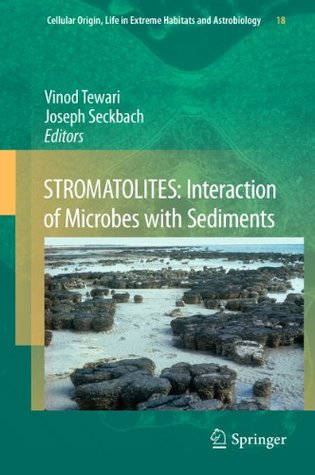
Stromatolites: interaction of microbes with sediments deals with ancient to modern examples of stromatolites and microorganisms which are observed in various diverse environments, such as marine, nonmarine, lacustrine and extreme geographical areas covering almost the whole earth.
Stromatolites and microbial mats microbial mats and stromatolites are diverse and complex ecosystems where different species of bacteria and other microbes.
Modern analogues are known where photosynthetic microorganisms — principally cyanobacteria — are responsible for forming them. Only rarely are microfossils found in ancient examples, but many.
Department of microbiology and cell science university of florida jamie foster’s research program is dedicated to examining the interactions between microbial communities and their surrounding environments to improve our understanding of the molecular mechanisms that microbes use to adapt and respond to changes in the environment.
Stromatolites: interaction of microbes with sediments - ebook written by vinod tewari, joseph seckbach. Read this book using google play books app on your pc, android, ios devices.
Fortunately, stromatolites do host evidence of microbial biomineralization throughout the entire geological record, although evidence of fossilized primary microbes is usually lacking (riding, 2000). In this regard, microscopic identification of mineralized microbial life-forms within stromatolite laminae has provided confirmation of how stromatolites form and demonstrated the participation of benthic microbial communities.
“stromatolites are pervasive in the fossil record and are some of our earliest examples of life on earth,” he says. “the microbial mats that created them were predominantly made up of cyanobacteria, which used photosynthesis – like plants do – to turn sunlight into energy, while producing so much oxygen over time they changed the early earth’s atmosphere to make it habitable for complex life.
Consequently, some archean stromatolites may have hosted microbial microbe-mineral interactions: early carbonate precipitation in a hypersaline lake.
The stromatolites in figure a are from greenland; those in c and d are younger stromatolites from western australia. Figure b shows the layers created by microbes as they formed the greenland.
Oct 8, 2016 stromatolites are formed by bacteria that grow in a “microbial mat”, depositing layers of sand and calcium carbonate held together with a glue-like.
Stromatolites: interaction of microbes with sediments: 18 cellular origin, life in extreme habitats and astrobiology: amazon.
They are microbial reefs created by cyanobacteria (or blue-green algae), which trap sediment that reacts.
Stromatolites: interaction of microbes with sediments provides an overview and latest information about the formation of stromatolites as a result of interaction of microbes with sediments. Eighty-three expert scientists from twenty-seven countries present the chapters in this volume which have been reviewed by thirty four referees.
Stromatolites can be defined as 'organosedimentary structures produced by the sediment-trapping, binding and/or precipitation activity of microbial communities that are dominated by photosynthetic.
Stromatolites or stromatoliths are layered sedimentary formations that are created by photosynthetic cyanobacteria. These microorganisms produce adhesive compounds that cement sand and other rocky materials to form mineral “microbial mats”. In turn, these mats build up layer by layer, growing gradually over time. Although they are rare today, fossilized stromatolites provide records of ancient life on earth.
Antarctica may seem cold and barren, but it has three important ingredients needed for life: light, water, and rocks (a source of carbon). With these three ingredients, specialized microbes called cyanobacteria can make their own food through photosynthesis and thrive in extreme environments where few other organisms can survive.
Dec 10, 2013 all was not lost though; in grad school i was exposed to a whole new level of diversity in soil: microbial diversity.
Abstract this book provides an overview and latest information about the formation of stromatolites as a result of interaction of microbes with sediments.
Fine-grained phosphates in pebbles and peloids indicate in situ phosphogenesis within a stromatolite —thrombolite reef environment that was subjected to periodic subaerial exposure and desiccation. This discovery supports the interaction of microbial activity and sea-level drop for the formation of the oldest known peritidal phosphorites.
Stromatolites are neither biotic fossils nor abiotic structures. Rather, they represent the complex interactions of microbes, sediments and the environment. Stromatolites were abundant and diverse during much of early earth history, and are the main source of information on early life for 85% of the rock record.
Stromatolites form through two processes: the trapping and binding of detrital grains by microbial mats and precipitation of calcium carbonate within microbial.
Zoic times, but that younger proterozoic stromatolites grew largely through the address sediment–mat interactions, in which microbial responses to sedimen-.
—stromatolite shapes, sizes, and spacings are products of microbial processes and interactions with topography, sedimentation, and flow.
The amd fe-rich stromatolites at gvs, thus, appear to be formed by interactions of microbial communities composed of all three domains of life; archaea, bacteria, and eukarya. Identification of microeukaryote-dominated stromatolites verifies the prominent role these organisms play in the formation and preservation of these structures.
In nature, healthy and asymptomatic plants cohabit with diverse microbes such as archaea, bacteria, fungi, and protists (collectively termed the plant microbiota,.
May 19, 2020 the organo-sedimentary structures are formed by complex interactions between microbial mat communities and their geochemical environment,.
Stromatolites are the most ancient fossils on earth, and these structures built by microbes can still be found forming today in various places around the globe.
Jul 21, 2017 stromatolite shapes, sizes, and spacings are products of microbial processes and interactions with topography, sedimentation, and flow.
Introduction this book provides an overview and latest information about the formation of stromatolites as a result of interaction of microbes with sediments. Eighty-three expert scientists from twenty-seven countries present the chapters in this volume which have been reviewed by thirty four referees.
Each one can influence the other,” said lita proctor, program director of the human microbiome project. “so, it was important that we captured these time-sensitive interactions between the microbiome and the host. ” preterm birth and missing bacteria in the vaginal microbiome.
Stromatolites: interaction of microbes with sediments provides an overview and latest information about the formation of stromatolites as a result of interaction of microbes with sediments. Eighty-three expert scientists from twenty-seven countries present the chapters in this volume which have.
Stromatolite deposits are formed by sediment trapping and binding, and/or by precipitation activities of the microbial communities (awramik 1976). The microbes are active on the surface layer of the stromatolites, while the underlying build-up is a lithified remnant of former microbial surface communities, that could be interpreted as a trace.
The role of microbes in accretion, lamination and early lithification of modern marine stromatolites shallow subtidal stromatolites, highborne cay, bahamas: extensive columnar build-ups (left) and vertical section showing lamination (right, picture 8 cm wide).
The stromatolites of el soplao cave contain an unusually high abundance of fossil microbes, which show exceptional preservation and high diversity. Based on their morphology, we have grouped the most abundant microbial forms into six main morphotypes, which can be further subdivided into some additional submorphotypes.
Microbial±silica interactions in icelandic hot spring sinter: possible analogues for some precambrian siliceous stromatolites.
Stromatolites and miss are first found in the early archean, recording highly evolved microbial activity early in earth’s his - tory. Whereas the stromatolites show enormous morphologic and taxonomic variation, miss seem not to have changed in morphol - ogy since their first appearance.
To help figure out these questions, scientists have been researching the complex interactions of microorganisms living in mat-like structures that have some of the most ancient ancestors on earth. Sort of like a fossilized microbial lasagna, fossils called “stromatolites” are formed when layered communities of different types of bacteria trap sand, dirt, and debris in their structure over time.
Mar 4, 2021 microbial mats are precursors of extant stromatolites. Microbial mat transition from soft cells to rock is enhanced by interactions with viruses.
Post Your Comments: