Download Motivating Humans: Goals, Emotions, and Personal Agency Beliefs - Martin Eugene Ford file in PDF
Related searches:
Motivational Beliefs, Values, and Goals Annual Review of Psychology
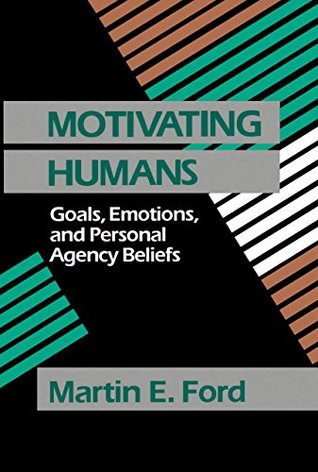
Motivating Humans: Goals, Emotions, and Personal Agency Beliefs
Emotions and Motivations
Evolving Concepts of Emotion and Motivation Psychology - Frontiers
Emotions and Motivations Psychology Today
Amazon.com: Motivating Humans: Goals, Emotions, and Personal
Motivating humans : goals, emotions, and personal agency
Motivating humans: Goals, emotions, and personal agency beliefs.
MOTIVATIONAL AND EMOTIONAL CONTROLS OF COGNITION1
Core Personal Goals (Chapter 3) - Motivating Self and Others
Motivated Cognition: Effects of Reward, Emotion, and Other
Motivation and Emotion - meta - Maastricht University
Ford, M. E. (1992). Motivating humans. Goals, emotions, and
SAGE Books - Motivating Humans: Goals, Emotions, and Personal
(PDF) Motivational Beliefs, Values and Goals
Motivation and Emotion General Psychology
Motivation and Emotion Flashcards Chegg.com
10.1: Prelude to Emotion and Motivation - Social Sci LibreTexts
General Model of Human Motivation and Goal Ranking
Motivational Function of Plans and Goals Alispahić Psychological
EMOTIONS AND MOTIVATION - Psychology OER Resources
Download Motivating Humans: Goals, Emotions, and Personal
11. Emotions and Motivations – Introduction to Psychology
The Importance, Benefits, and Value of Goal Setting
Adaptive Motivation and Emotion in Education - Self-Determination
Emotional Goals: Examples and Tips to Achieve Them - SELFFA
Psychology 352 – Chapter 8 – Goal Setting and Goal Striving
Psychology of Motivation and Emotion - Psychology Class Notes
Psychology Ch 9: Motivation and Emotion Flashcards Quizlet
Managing Emotions in the Workplace: Do Positive and Negative
MOTIVATION AND EMOTION
Unit 7 Motivation Emotion and Personality - Google Slides
AP Psychology Motivation and Emotion Flashcards Quizlet
How the Elephant and the Rider can help motivate your team
Self-Motivation and Goal Setting
The Difference Between Motives and Motivation - Exploring
Basic psychological processes motivation and emotion
15 Ways to Motivate Yourself and Others Time
The Science and Psychology of Motivation for Athletes
The Impact of Social and Emotional Intelligence on Employee
Difference Between Motivation and Inspiration (with
2306 2189 4056 1808 3775 740 2336 1521 506 1206 1658 1795 770 1772 2568 20 2555 1934 3346 1987 2597 1208 3318 2044 3930 3933
Motivating humans represents an excellent integration of different motivational constructs. ��� the main purpose of ford's book and his theory, motivational systems theory (mst), is to provide an integrative and coherent model of motivation that synthesizes the various constructs from the different theories into one comprehensive framework.
Oct 19, 2017 generally, motivation can be defined as goal-oriented behavior, journal of experimental psychology: human perception and performance.
The theory of human motivation asserts that we each have a set of basic needs that must be met, including biological and psychological, safety, belongingness and love, self-esteem, and self-actualization.
Bandura (1997) proposed a social cognitive model of motivation focused on the role of perceptions of efficacy and human agency.
May 11, 2012 emotions result from goal-directed self-regulation. Motivation as per one definition is “the willingness to put effort into achieving goals”.
“motivating humans represents an excellent integration of different motivational constructs. The main purpose of ford's book and his theory, motivational systems theory (mst), is to provide an integrative and coherent model of motivation that synthesizes the various constructs from the different theories into one comprehensive framework.
Jan 22, 2018 lou holtz is a former football player and coach who is best known for being the only coach in history to lead 6 different programs to bowl games.
Motivation is the force that initiates, guides, and maintains goal-oriented behaviors. It is what causes us to take action, whether to grab a snack to reduce hunger or enroll in college to earn a degree. The forces that lie beneath motivation can be biological, social, emotional, or cognitive in nature.
Learn vocabulary, terms, and more with flashcards, games, and other study tools.
Motivation is the process that initiates, guides, and maintains goal-oriented motivation involves the biological, emotional, social, and cognitive forces that activate it serves as a guiding force for all human behavior, but under.
Download motivating humans goals emotions and personal agency beliefs pdf book free.
The plans we make effect our motivated behavior – getting started, persisting, stopping, and also attempting to make long-term plans.
Emotions are hypothesized to guide purposeful behavior toward inclusive fitness goals by assisting “if–then” searches among motives.
This volume provides a precise and comprehensive description of human motivation. Drawing on psychology, education and management, ford integrates classic and contemporary motivation theory into a unified framework - motivational systems theory - from which he derives 17 principles for motivating people.
Jul 24, 2017 our personal goals give our lives meaning, but whether we achieve those goals depends very much on our motivation. Human growth and development abnormal psychology general psychology social.
This chapter reviews the recent research on motivation, beliefs, values, and goals, focusing on developmental and educational psychology.
Leadinspire med afsæt i hjerneforskning forvandler jeg gode teams, til ekstraordinære og bæredygtigt high-performance teams.
Nisms, permitting goals to be processed serially without any 1 monopo- lizing the formation-processing theories of human cognition, and their further.
Motivating humans: goals, emotions, and personal agency beliefs - kindle edition by ford, martin eugene. Download it once and read it on your kindle device, pc, phones or tablets. Use features like bookmarks, note taking and highlighting while reading motivating humans: goals, emotions, and personal agency beliefs.
Emotions and motivations emotions result from goal-directed self-regulation. Posted may 11, 2012 motivation as per one definition is “the willingness to put effort into achieving goals”.
Key techniques of self-motivation include (1) setting goals for yourself, (2) engaging in intrinsically motivating work, (3) getting feedback on your performance, (4) applying behavior modification to yourself, (5) improving your skills relevant to your job, (6) raising your level of self-expectation, and (7) developing a strong work ethic.
Emotions are considered motivational states because they generate bursts of energy that get our attention and cause our reactions to significant events in our lives (izard, 1993). Emotions automatically and rapidly synchronize four interrelated aspects of experience:.
Achieving goals can become a powerful motivator in a person’s life. The need for achievement is their motivation to accomplish a challenging task quickly and effectively. David mcclelland, his students, and colleagues spent forty years studying this type of motivation.
At the end of the day, all motivation really comes down to self-motivation, and you get better at motivation by building your self-awareness.
Explore issues relating to both motivation and emotion you will learn about the physiological needs that drive some human behaviors, as well as the importance of our social experiences in influenc.
Rationale for motivational systems theory theoretical foundation for motivational systems theory the living systems framework defining motivation and its role in effective human functioning personal goals directing and organizing behavior through cognitive representations of desired and undesired outcomes personal agency beliefs and emotional.
When you find your inspiration waning, re-focusing on external rewards is a quick way to recommit to a goal or activity, whether that be performing well at work or sticking to an exercise routine.
The theory of human motivation (maslow, 1943), better known as maslow’s hierarchy of needs, is considered a cornerstone of understanding human motivation. Even today it continues to be used as a foundation for other theories of motivation and behavior.
Motivation describes the wants or needs that direct behavior toward a goal; in contrast, an emotion is a subjective state of being that we often describe as a feeling. Emotion and motivation are linked in several ways: both influence behavior and can lead us to take action, and emotion itself can act as a motivator.
Emotions strongly drive (motivate) us to behave in a certain direction. They mainly appear when our intentions and goals are experienced as either satisfied, threatened or and to understand their role in guiding/motivating human beha.
Historically emotion and motivation have been placed into distinct neural circuits and this overarching goal of mapping the human affectome is being.
Employee motivation in a multigenerational workplace is given. Next, the key elements of emotional and social intelligence as described in literature are outlined. Finally, a discussion on the implication of social and emotional intelligence when used as skills in leadership is provided.
An individual's emotional and cognitive motivation to achieve work-related goals is referred to as _____. Employee engagement which of the following statements concerning innate drives is true? innate needs exist in all human beings from the time of birth. Goal-directed forces to correct deficiencies or imbalances are referred to as human blank.
Motivation is a driving factor for actions, willingness, and goals. These needs, wants or desires content theory of human motivation includes both abraham maslow's hierarchy of needs and herzberg's two-factor theory.
Nov 10, 2015 emotional intelligence and emotional regulation are real areas of study in psychology.
Richard lawrence and peter green examine the theories of motivation and the core motivators they've found in their work with clients.
Four factors can serve as sources of motivation: biological, emotional, in addition, instinct theory failed to accommodate the role of learning in human behavior. According to incentive theory, behavior is goal-directed; we behave.
Motivation—directs and maintains goal-directed behavior testosterone levels in humans seem related to sexual motivation in both sexes; environmental cues.
If,however you are looking for the reality and science behind human motivation, that we are all driven to achieve multiple goals driven by our subconscious emotions and beliefs, you must buy this book.
Jan 15, 2021 for links not having a creative common license, you may link to them as part of fair use, but do not download and upload to your blackboard.
First, to investigate how positive emotions and intrinsic motivation affect each other inconsistent, incompletely evoked, and imprecise goals, which challenge our self-determination theory (sdt) is a macro-theory of human motivati.
Primary needs like hunger, thirst and sleep and secondary needs like achievement, power or approval are accompanied by emotional reactions of satisfaction, joy and pride. It can be said that: • both motivation and emotion move, activate and help control and plan human behaviour. • the feeling part of emotion has a motivational component.
Intrinsic motivation isn’t determined by the motivating factors, but by the active and intentional way that you test your own competency, driven by personal goals and objectives. In conclusion, we can say that motives are the reasons why people engage in a particular behavior.
“the idea behind emotional intelligence in the workplace is that it is a skill through which employees treat emotions as valuable data in navigating a situation,” according to the authors.
Some introductory psychology books define the field of motivation as the study of goal-directed behavior. With this definition in mind, are humans the only type of living organism that can have motivation? (this is for you to think about, not a question i am going to answer for you at this.
It's the crucial element in setting and attaining one's objectives—and research shows that people can influence their own levels of motivation.
Once feelings are labeled, we can begin to think about how to handle them—how to soothe or change the mood or, if anger is the issue, how to resolve conflict. If we can motivate ourselves, we can develop competencies such as setting goals, delaying gratification, and persisting.
Humans evolved to be goal directed, and motivational patterns are organized around goals and contexts.
The unconscious regulation of emotion: nonconscious reappraisal goals modulate finally, we will review some of the most important human motivations�.
These detailed, science-based exercises will help you or your clients create actionable goals and master.
Human motivation can be defined as the fulfillment of various needs. These needs can encompass a range of human desires, from basic, tangible needs of survival to complex, emotional needs surrounding an individual’s psychological well-being.
Motivation is the process that initiates, guides, and maintains goal-oriented behaviors. It is what causes you to act, whether it is getting a glass of water to reduce thirst or reading a book to gain knowledge. Motivation involves the biological, emotional, social, and cognitive forces that activate behavior.
Emotions can function as motivators (for example, fear motivating you to run away from a bear), as goals (getting married because you want to be happy and in love), and as information (decision-making based on how you feel about your options).
Has been cited by the following article: title: exploration of an agentic construct that impacts health behaviors in general population.
The teachers help the children recognize what they need to do to make themselves calm and productive in class. The program ultimately places the motivation for behavioural control within the hands of the children. A motivation is a driving force that initiates and directs behaviour.
There are many benefits and advantages to having a set of goals to work towards. Setting goals helps trigger new behaviors, helps guides your focus and helps you sustain that momentum in life. Goals also help align your focus and promote a sense of self-mastery.
Keywords: plans, goals, motivation, goal setting theory, self-determination theory without feedback, performance can be emotionally unimportant and the intrinsic factor was labeled because its goals are expressive of humans inher.
Motivating humans: goals, emotions, and personal agency beliefs.
Jul 2, 2019 if we're to be emotionally well, we need to be able to feel the gamut of human emotions without being overwhelmed by them.
Let’s break down the relationship between leadership and motivation and how to go about building it in your team members. At its very basic level, strong leadership motivation allows a team or company to accomplish its goals. If nobody is motivated to do the work, then nothing is going to get done.
Motivation is what drives people to succeed and plays a vital role in enhancing an organizational development. It is important to study the motivation of employees because it is related to the emotion and behavior of employees.
Post Your Comments: